The intent of I05 Responsible Water Use, an imperative of the Water Petal, is to encourage projects to treat water like a precious resource, minimising waste and the use of potable water, while avoiding downstream impacts and pollution.
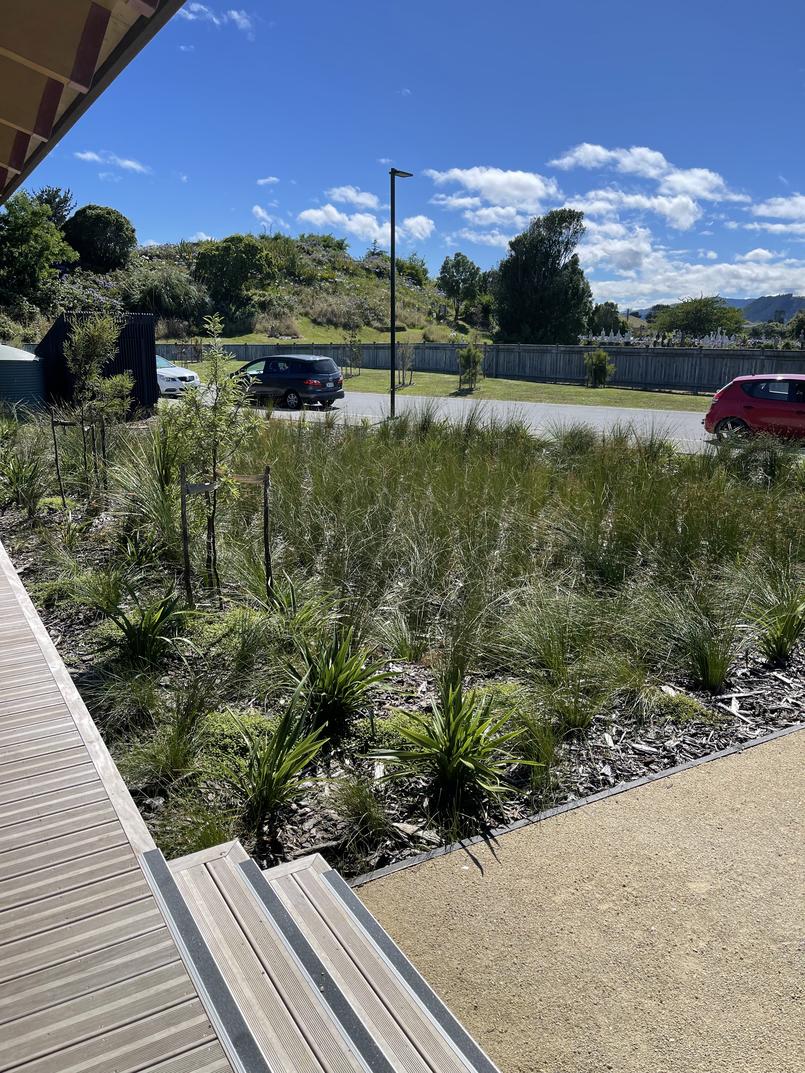
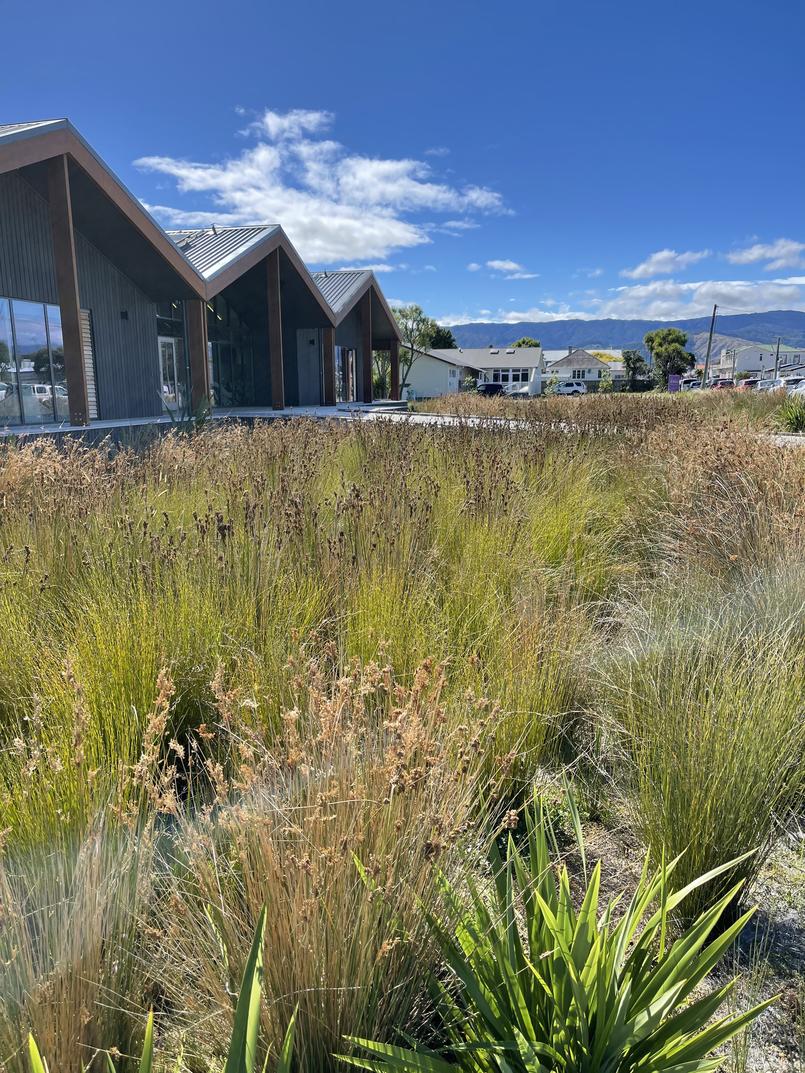
All projects must treat all stormwater on site, through natural or mechanical means and without chemicals, and manage all stormwater based on both pre-development hydrology and current ecological conditions, as determined by a qualified professional (Morphum Environmental). For Pā Reo, the site wide integrated water strategy has been designed to best replicate the pre-developed conditions of the site alongside other imperatives to reduce potable water demand and support resilient and thriving landscapes and ecosystem function. The key objective is to mimic the natural eco hydrology which reflects the position of the site on the free draining alluvial soils between two lowland streams with a series of permanent and ephemeral freshwater wetlands historically downstream of the site. Whilst the current context includes any excess flows from the site discharging to an excavated open channel the historical discharge would have been to a network of wetlands with aspirations to restore these in the landscape as part of a separate plan for neighbouring downstream farmland.
To show compliance with the hydrologic stormwater standards, project teams shall develop an appropriate stormwater model, Morphum used MUSIC. To account for climate change, the design precipitation depths shall be increased by a minimum of 15%.
All projects must treat and manage all stormwater on site using green stormwater infrastructure where feasible and meet the following hydrologic performance standards: for a wetland, post development hydrology shall match within 10% the historic (conditions that existed prior to human disruption) run-off volumes, and for all other conditions, must retain 98% of the average annual precipitation volume on-site. The stormwater volume that falls as precipitation on the site and is either re-used for potable or non-potable uses, infiltrated into the ground, or leaves the site through evapotranspiration but does not leave the site as piped or overland flow will be considered retained. Stormwater that is held in a pond or vault and then leaves at a slower rate is detained and not retained. The performance requirements include 90% removal of total suspended sediment, 30% of copper, 60% of zinc and 50% of phosphorous from stormwater.
Examples of stormwater control measures given by ILFI include: bioretention with native soil infiltration, bioretention (with underdrain), green roofs and walls, blue roof and/or internal building storage, permeable pavement, stormwater tree trench, vegetated swales and buffers, infiltration trenches, detention basin (e.g. stormwater wetlands and ponds), rain barrels and cisterns.
All projects must not use potable water for irrigation, and use less water for the project’s other needs at 50% of the rate of a baseline regional new building of the same type. The baseline must align with the potable water end uses (e.g. sinks, shower, drinking fountains, washers, toilet flushing etc.) that are within the project scope. Metered water use data (by 335) of total potable water use during the performance period (a year) has been supplied to the auditor to show that requirements have been met.
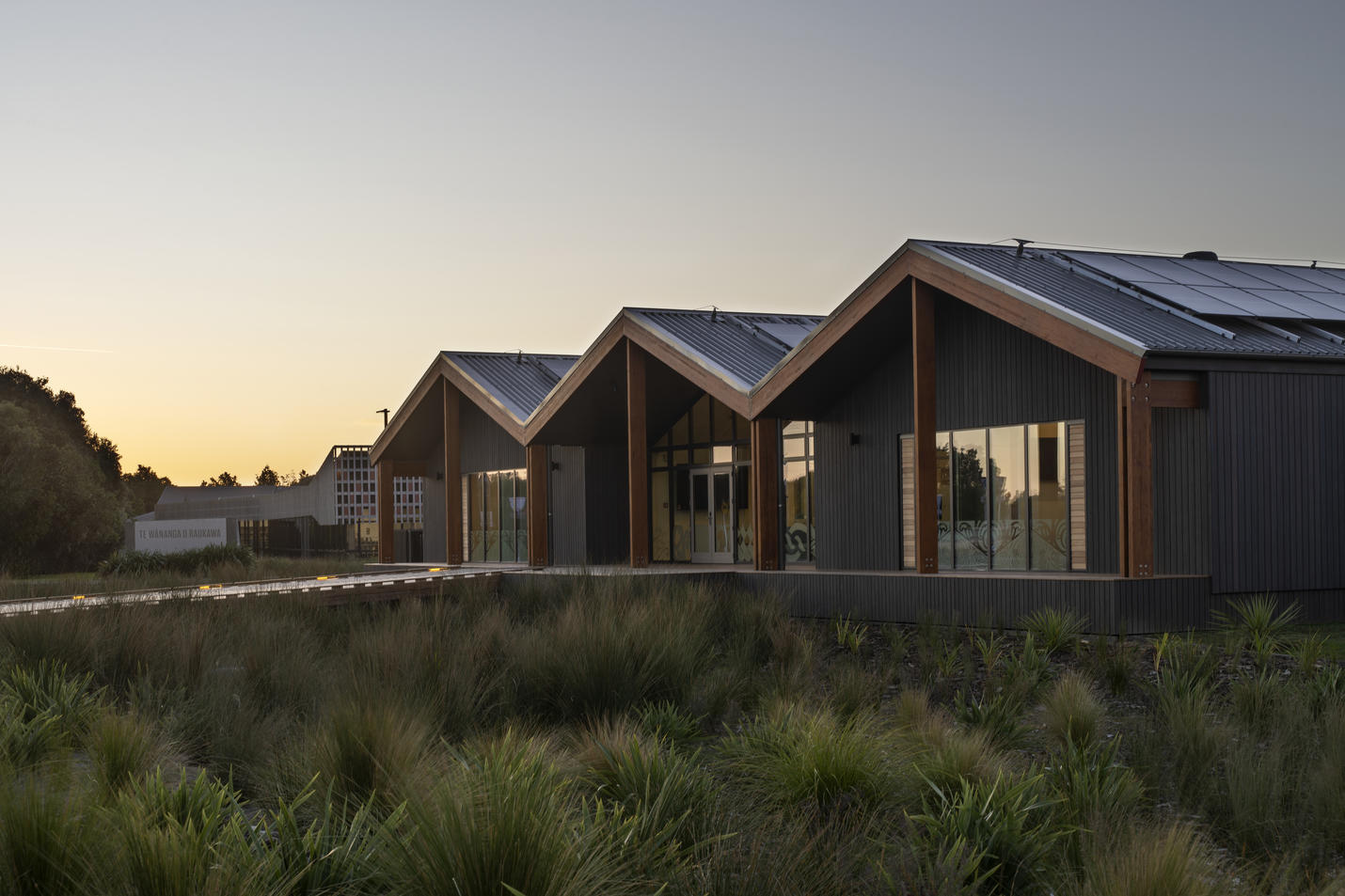
Te Wānanga o Raukawa showcases a comprehensive approach to sustainable water management. The pre-development hydrology analysis revealed a significant reduction in annual flow off from 3.64 million litres annual flow pre human habitation of the site, 13.53 million litres per annum pre project start reduced to 3.04 million litres post-project completion. Rainwater collection plays a crucial role, with 100% of project water being collected and discharged on-site through water tanks and rain gardens. The estimated monthly rainwater roof catchment capacity is 9,550 litres, with no supplemented supply by a municipal water connection, a connection is made, but locked off and available, for future health and safety/emergency use.
Potable water usage is optimised through carbon and UV filters with first flush diverters, ensuring quality supply to kitchenettes and bathrooms. The average monthly water use is 9,328 litres, with specific allocations for Mīria te Kakara, Rangataua, and Waitapu Buildings, including potable water tanks, WC flushing water tanks, and irrigation systems utilising rainwater storage.
The fire protection strategy eliminated the need for fire sprinklers, only retaining an in-ground hydrant for fire services. Wastewater treatment involves a septic tank system for black water filtration with a 700m2 dispersal field, while stormwater management includes rain gardens and wetlands designed for a 100-year flood event. Despite climatic challenges, the water supply system at Te Wānanga o Raukawa is meticulously planned to meet the majority of the buildings' needs and support sustainable irrigation practices.