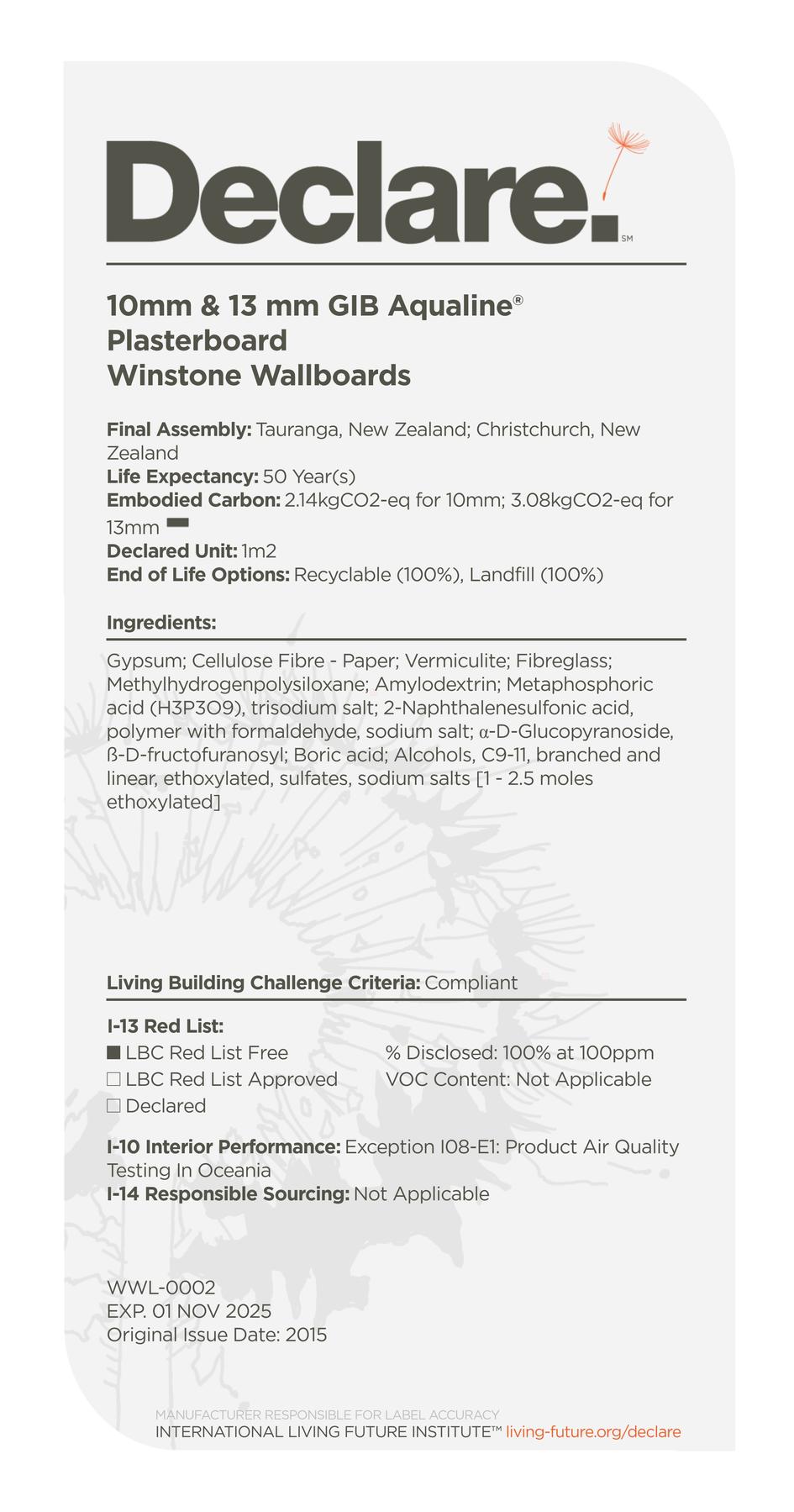
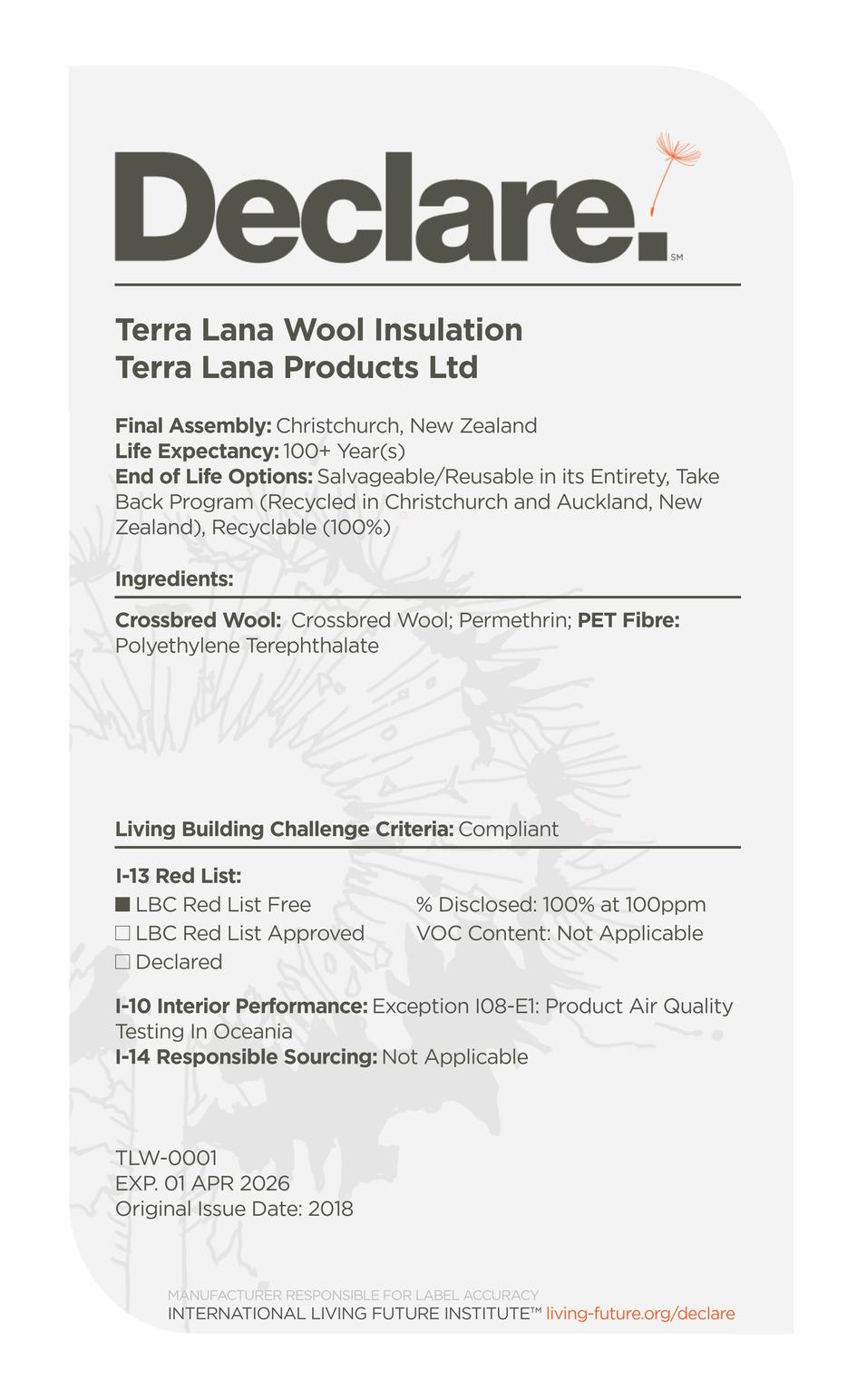
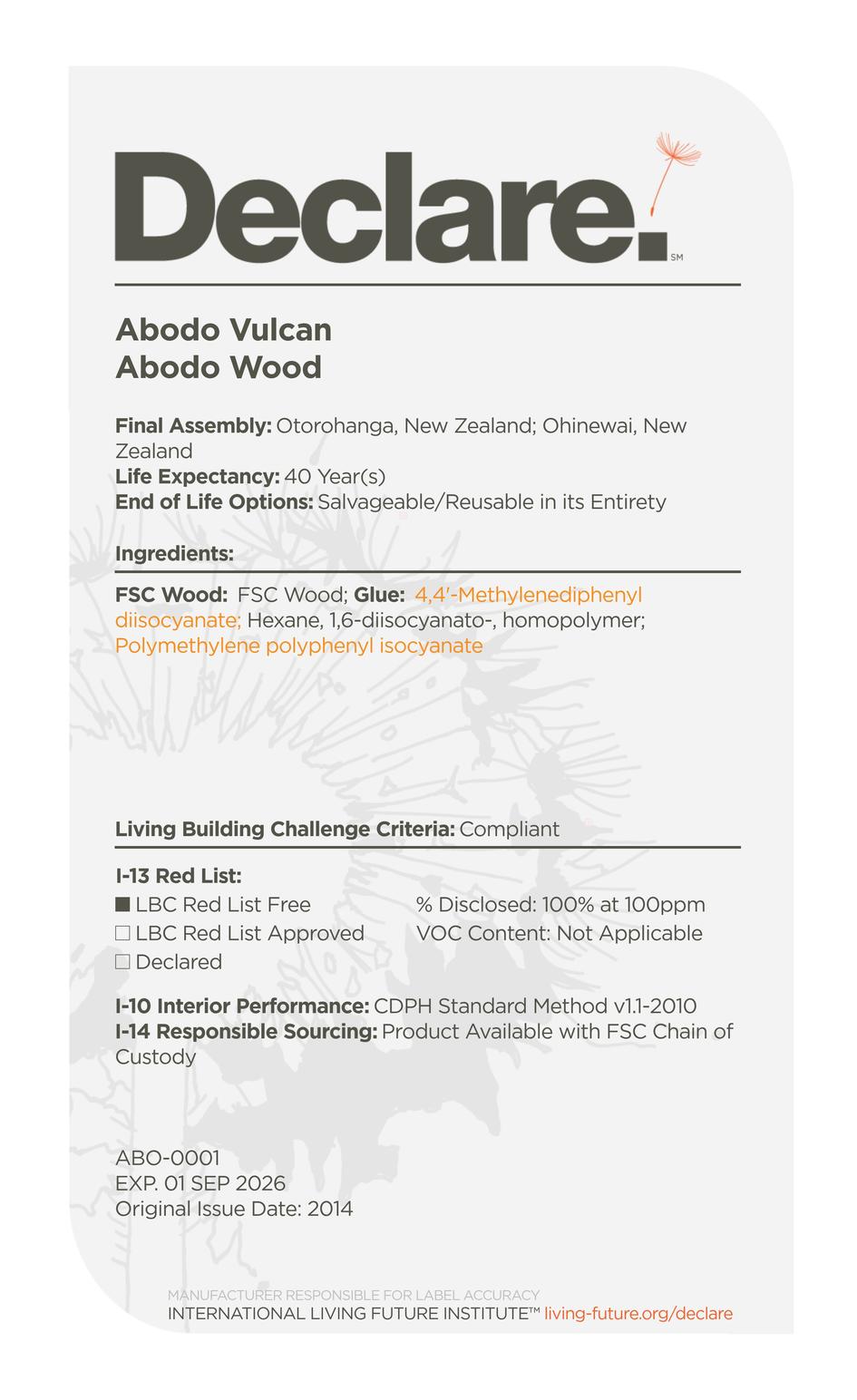
The intent of this Imperative is to foster a transparent materials economy free of toxins and harmful chemicals. The ultimate goal is that project teams seek, prioritise, and advocate for products with public ingredient disclosure of 100% of intentionally added ingredients plus residuals, with associated CAS RNs present at 100 parts per million (ppm), or .01%, in the final product, for a minimum of 90% of the installed materials by cost.
Complying with the Red List in New Zealand is hard, and is the most challenging imperative to achieve. Because New Zealand is a small economy (5.2 million population) and distant from many markets there are only a couple of people and companies with skills to research and achieve this Imperative, and definitely no contractors of scale and skill at this time. Tennent Brown did all materials research and specified at tender all LBC pathway compliant materials, this appears to be a very different approach to those in or near larger economies.
The Pā Reo project, required 636 kinds of materials to be vetted for compliance with the Red List, and Pā Reo achieved an impressive 96% compliance rate. This dedication to sustainable and ethical material selection reflects a commitment to meeting the stringent criteria of the LBC and aligns with the core values of fostering learning environments and embracing Te Ao Māori principles.
The utilisation of the Declare Database proved to be a valuable resource for the project, although there are only about 86 Declare products in New Zealand. The scarcity of Living Product Challenge materials available in New Zealand made sourcing them a hurdle due to limited accessibility. The design team actively advocated for the declaration of materials to increase their availability and transparency.
Tennent Brown Architects' involvement in two Living Building Challenge projects, Pā Reo for Te Wānanga o Raukawa and Ngā Mokopuna (formerly the Living Pā) for Victoria University of Wellington, has facilitated the exchange of ideas and practices. This allowed for some mutual learning opportunities between project teams, clients, and contractors, fostering a cross-pollination of innovative concepts.
Any Declare labelled product that is "Red List Free" or "Red List Approved" (meets approved LBC exceptions) is allowed on an LBC project. This is the way to tell from a Declare label that the material is non-toxic. If the Declare label is "Declared", this means the product is transparent but contains Red List items. Red List items on a Declare label are shown in dark orange. Priority or Watch List items are shown in light orange, these are not on the Red List, but only a warning and could be added to the Red List in the future.
The Living Building Challenge (LBC) Red List is a list of chemicals representing the “worst in class” substances prevalent in the building industry that pose serious risks to human health and the environment and the reasons why these chemicals are on the Red List is explained here.
At the time of our project, this was the Red List of banned chemical classes from at least 90% of the project’s new materials by cost: