The intent of this Imperative is to support sustainable extraction of materials and transparent labeling of products.
All projects must advocate for the creation and adoption of third-party certified standards for sustainable resource extraction and fair labour practices for extraction of rock, metal, minerals, and timber.
All projects must either source 80% or more of all wood, as Forest Stewardship Council (FSC) certified, and the remaining 20% of wood must be from low-risk sources.
All projects must contain two Declare products per 200 m2 of gross building area and advocate to all manufacturers that are not in Declare that they register their products in the Declare database.
All projects must incorporate one product certified under the Living Product Challenge per 1000 m2 of gross building area, up to three products. The Living Product Challenge label is for products that would like to be regenerative toward the environment and it is a step up from Declare.
“Pursuing the Materials Petal is more than hitting or not hitting a benchmark; it opens up an ongoing dialogue about materials throughout the design process.” - Katie Ackerly, Associate/Sustainability Lead, David Baker Architects
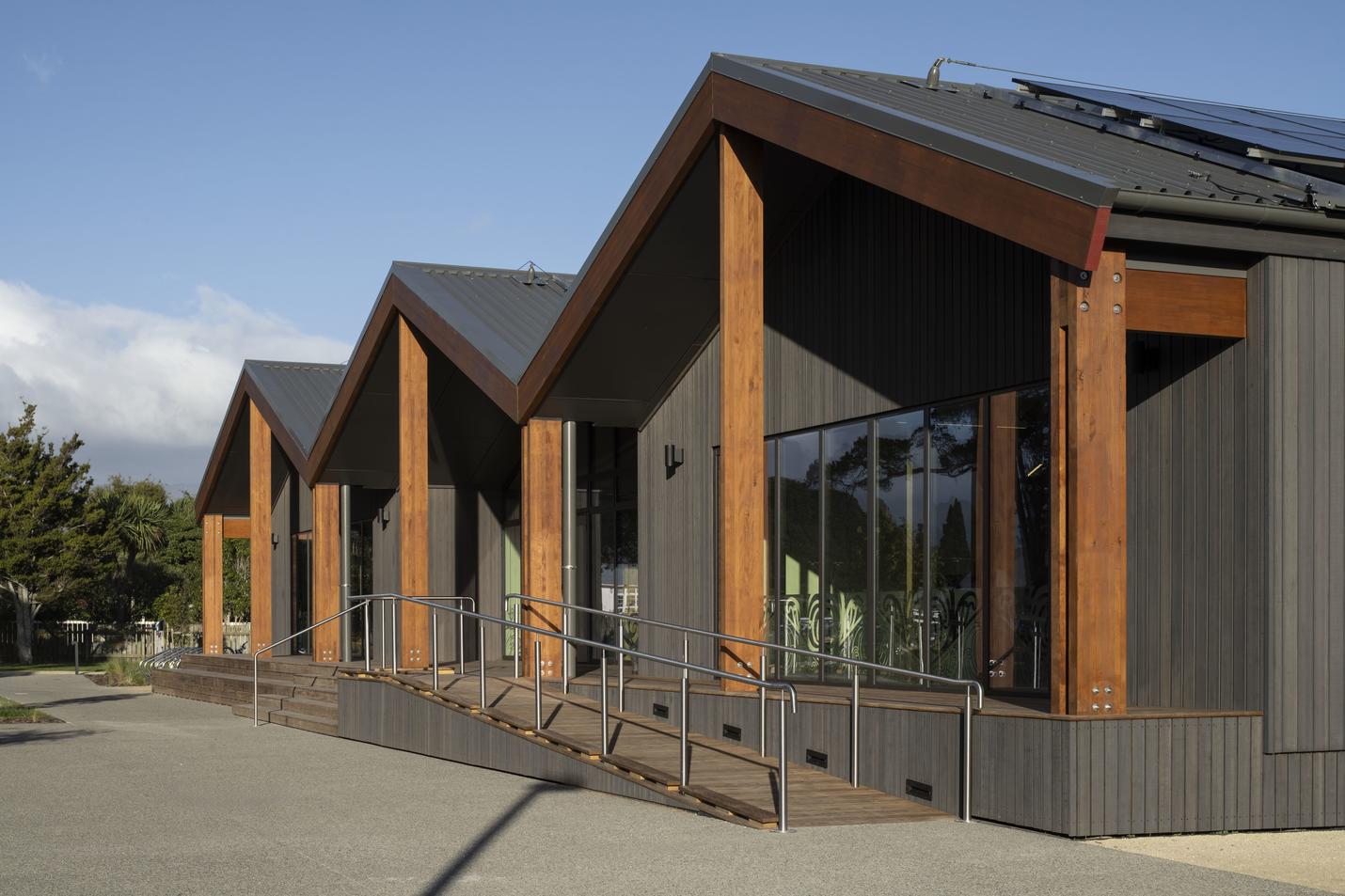
Responsible sourcing played a crucial role in the procurement and construction of Pā Reo, especially during the challenges posed by the Covid-19 pandemic. Issues arose with sourcing FSC certified Radiata Pine due to the pandemic's impact on material availability. Discussions with Living Future highlighted that while not all New Zealand Radiata Pine was FSC-certified, its sustainable sourcing within New Zealand made it a viable option, considering it constitutes a vast majority (approximately 90%) of New Zealand's planted forests. NZ is considered a low risk wood country for the LBC.
All Structurally Engineered Wood Products and LVL was gown and manufactured within 380 km of the Pā Reo site. All cladding was Thermally Modified Radiata Pine sourced locally.