The intent of the imperative I15 Living Economy Sourcing is to foster local communities and businesses, while minimising transportation impacts.
“Every time you spend money, you’re casting a vote for the kind of world you want.” Anna Lappe, American Author and Educator
The project must incorporate place-based solutions and contribute to the expansion of a regional economy rooted in sustainable practices, products, and services.
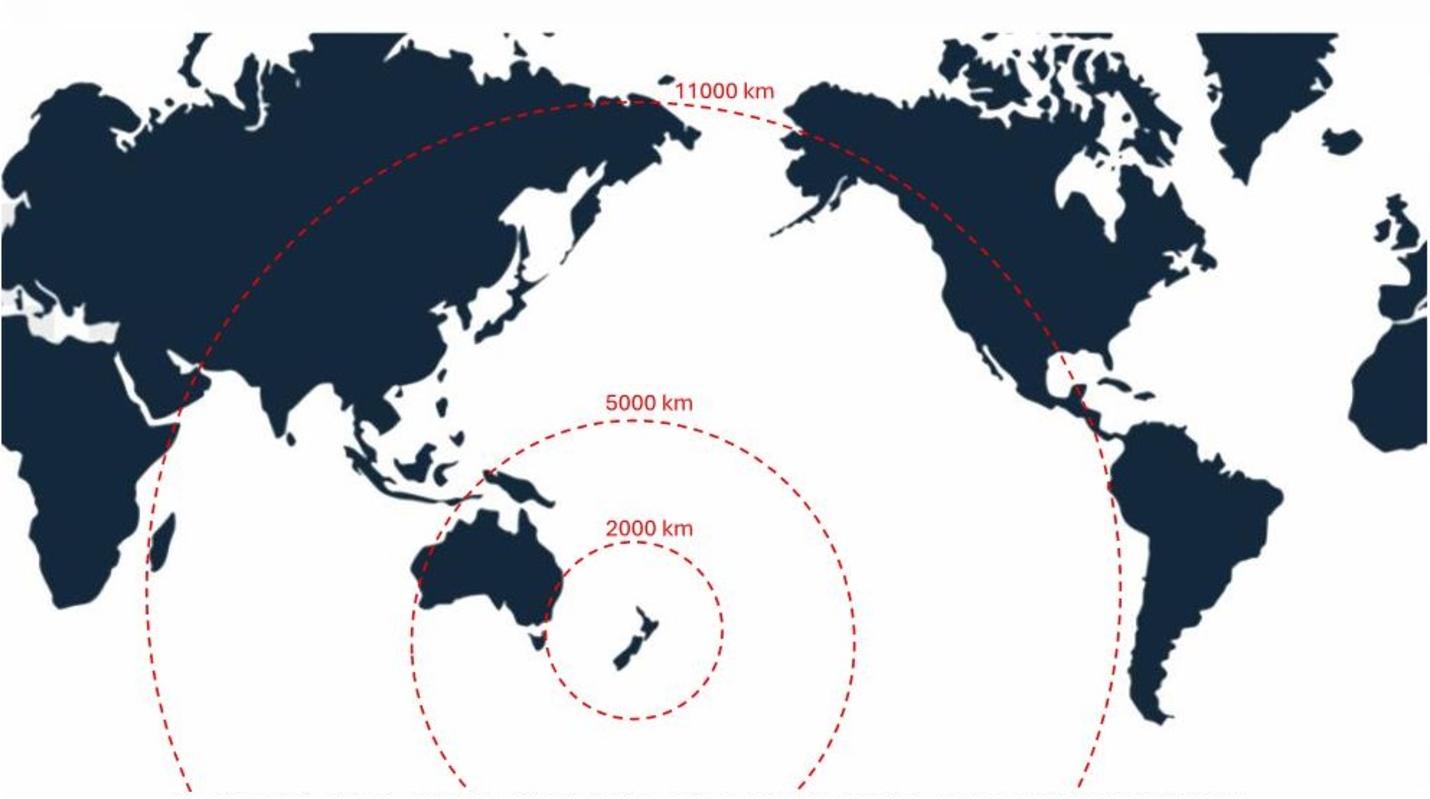
For New Zealand, the manufacturer location (the final point of assembly, fabrication or manufacture of a system, product or building material) for materials must adhere to the following restrictions:
• 20% or more of the materials construction budget (the total cost of all permanently installed materials and systems furniture delivered to the site, excluding labour, soft costs and land) must come from within 2000 km of the construction site.
• 30% of the total materials construction budget must come from within 5000 km of the construction site or closer.
• An additional 25% of the materials construction budget must come from within 11000 km of the construction site.
• The remaining 25% of materials may be sourced from any location.
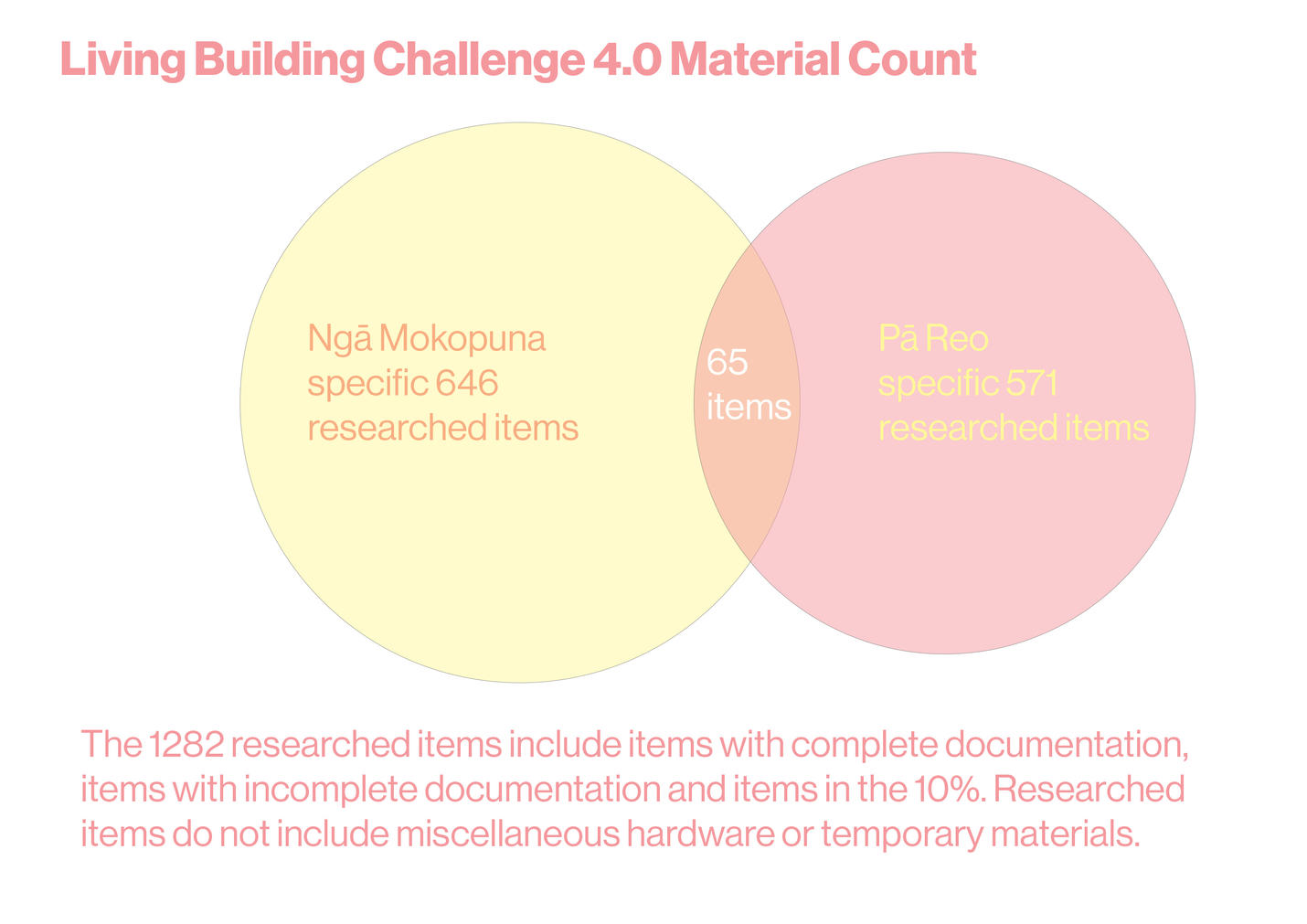
The Pā Reo project meticulously documented the material costs of all 636 kinds of materials used, identifying their city of manufacture. A detailed analysis was conducted to determine the distances from the site, ensuring compliance with the Living Economy Sourcing requirements. The project successfully adhered to the sourcing criteria, bullet-pointed above.
This comprehensive data collection process, though time-consuming, underscored the importance of considering the carbon footprint associated with transportation. The team's dedicated efforts in gathering and analysing this information reinforced the significance of mindful sourcing practices outlined in modules A2, A4, and C2 of Lifecycle Assessments (LCA’s).
In addition, Pā Reo salvaged significant amounts of furniture as well as a transformer and traditional carvings.
By prioritising local and regional sourcing wherever possible, Pā Reo not only met the stringent requirements set forth by the Living Building Challenge but also demonstrated a commitment to sustainability and responsible material procurement.
The emphasis on minimising transport-related emissions reflects a holistic approach to building practices that prioritise environmental considerations while achieving project goals.
“In order for us to be effective as a movement, we must be able to bring more people into our cause. To truly expand the sustainability community, we have to listen to one another, even to those with whom we sometimes disagree.” Lauren Sparandara, REWS Sustainability Program Manager, Google