The intent of this Imperative is to integrate waste reduction into all phases of projects and to encourage imaginative reuse of salvaged “waste” materials.
“If it can’t be reduced, reused, repaired, rebuilt, refurbished, refinished, resold, recycled, or composted, then it should be restricted, redesigned or removed from production.” Pete Seeger, Folk Singer & Social Activist
All projects must strive to reduce or eliminate the production of waste during design, construction, operation, and end of life in order to conserve natural resources and to find ways to integrate waste back into either an industrial loop or a natural nutrient loop.
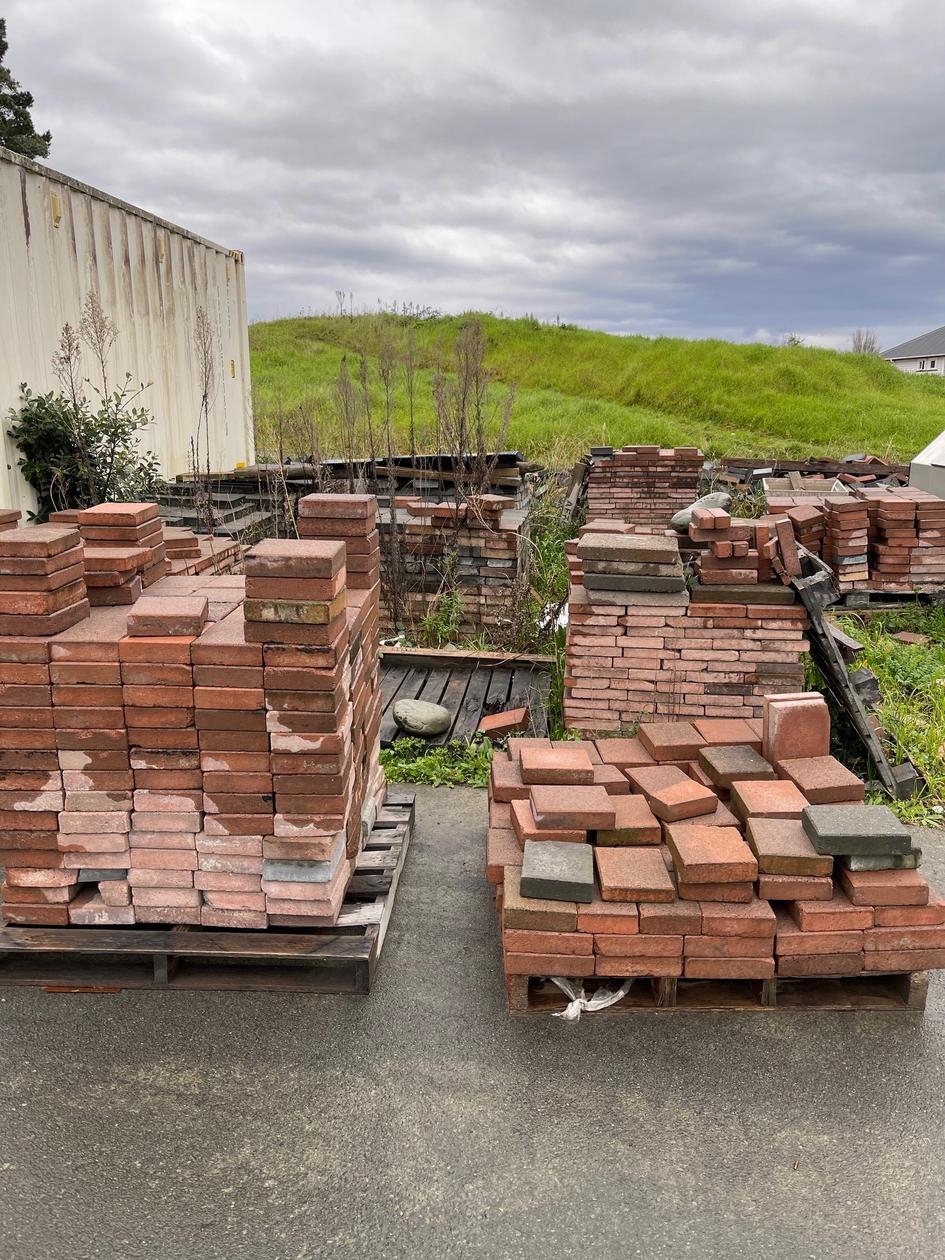
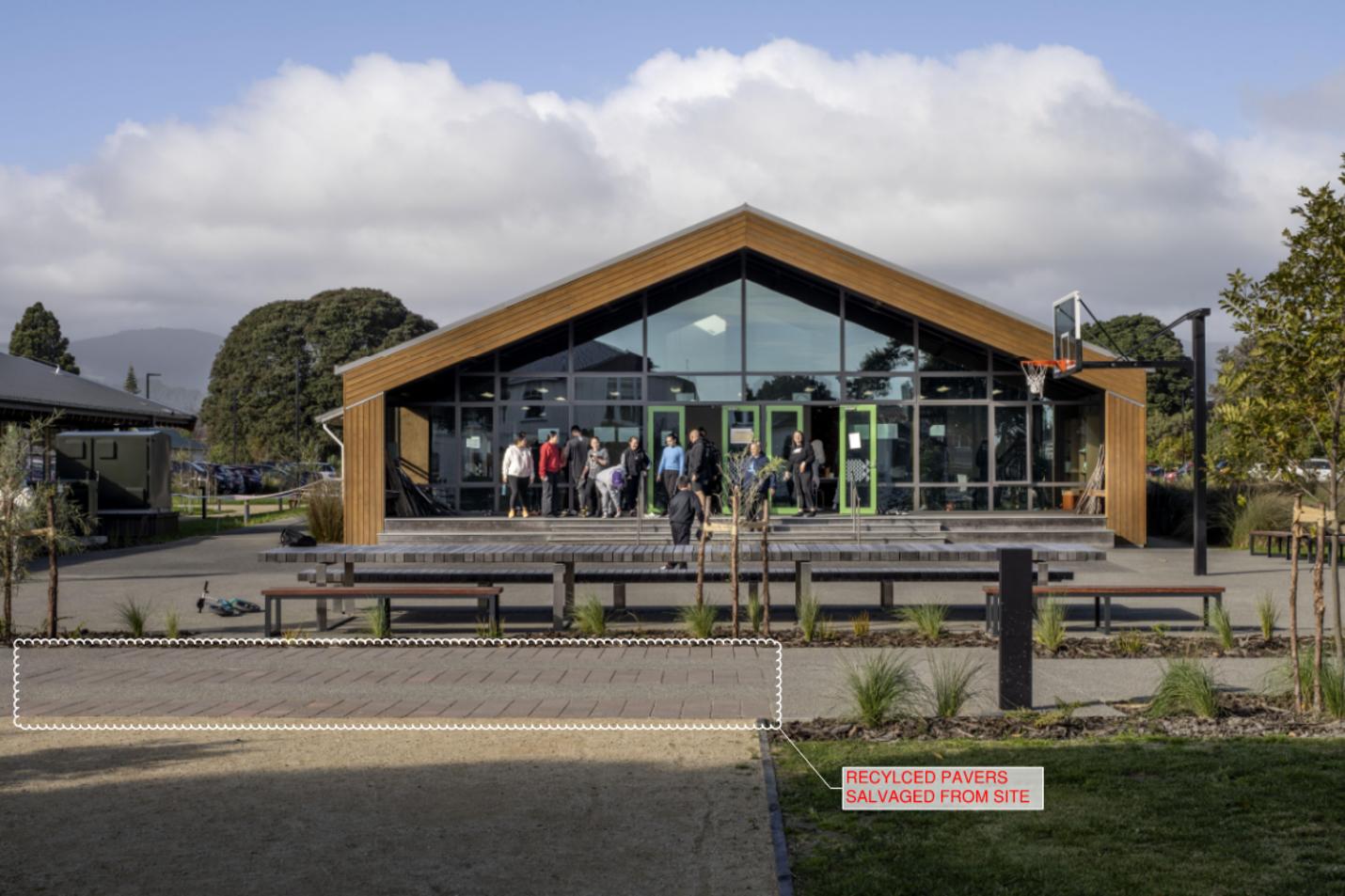
All projects must feature at least one salvaged material per 500 m2 of floor area.
All projects must create a Materials Conservation Management Plan.
Pā Reo successfully implemented a robust waste management strategy by meticulously weighing all waste.
The project achieved remarkable diversion rates.
LBC requires a minimum:
• 99% for metals
• 99% for paper and cardboard
• 100% for soil and biomass
• 95% for rigid foam, carpet and insulation
• 90% for all others as a combined weighted average
This comprehensive approach to waste management has been a testament to the commitment of the contracting team in this small provincial region.
Out of the total 3060 tonnes of waste generated, a significant portion consisting of 2200 tonnes of soil was reused on the adjacent farm, the project excelled in waste diversion by achieving an impressive rate of 99.8%. This outstanding accomplishment translated to only 3.815 tonnes of waste being sent to landfill, showcasing the project's dedication to minimising environmental impact and promoting sustainability through efficient waste handling practices.
The meticulous tracking and diversion of various waste streams underscored Pā Reo's commitment to upholding the principles of the Living Building Challenge, particularly in ensuring responsible waste management and resource conservation throughout the project lifecycle. This has evolved into Te Wananga o Raukawa adopting this approach for the entire campus going forward.
“Humans are the only species on the planet that don’t live by zero waste principles. Zero waste is a “call to action” that aims to bring an end to the current “take, make, and waste” mentality of human society… Zero waste means swimming upstream to the courses of waste generation, rather than merely reducing the downstream impacts of waste.” Michael Jessen, Discarding the Idea of Waste: The Need for a Zero Waste Policy Now